

Sustainability · 2025
In this section58 topics
- Sustainability Policy3 items
- Sustainability Goals & UN SDGs3 items
- Policy Review3 items
- Impacts on Stakeholders — Overview1 item
- Business Value Chain1 item
- Stakeholder Analysis1 item
- Environmental Policy & Guidelines5 items
- Environmental Policy Review3 items
- Energy — Plan & Guidelines3 items
- Energy — Electricity Consumption1 item
- Energy — Fuel Consumption1 item
- Energy — Targets3 items
- Energy — Performance & Outcomes3 items
- Water Management — Overview1 item
- Water — Plan & Guidelines3 items
- Water — Withdrawal, Discharge & Consumption1 item
- Water — Targets3 items
- Water — Performance & Outcomes2 items
- Waste — Plan & Guidelines3 items
- Waste — Generation, Disposal & Recycling1 item
- Waste — Targets3 items
- Waste — Performance & Outcomes2 items
- Greenhouse Gas — Overview1 item
- GHG — Plan & Guidelines3 items
- GHG — Emissions1 item
- GHG — Emissions Verification5 items
- GHG — Principles & Standards2 items
- GHG — Targets1 item
- GHG Targets — Net Zero1 item
- GHG Targets — Other Targets1 item
- GHG — Performance & Outcomes2 items
- Environmental Legal Incidents2 items
- Other Environmental Management2 items
- Social Sustainability — Overview2 items
- Social Policy & Guidelines5 items
- Social Policy Review3 items
- Social — Principles & Standards Practised1 item
- Human Rights Due Diligence4 items
- Employee Management — Overview1 item
- Employees — Plan & Guidelines5 items
- Employees — Workforce4 items
- Employees — Remuneration & Provident Fund1 item
- Employees — Training & Development2 items
- Employees — Occupational Health & Safety2 items
- Employees — Labour Relations1 item
- Employees — Employee Representation2 items
- Employees — Targets2 items
- Employees — Performance & Outcomes2 items
- Customer Management — Overview1 item
- Customers — Plan & Guidelines5 items
- Customers — Satisfaction Results2 items
- Customers — Targets3 items
- Customers — Performance & Outcomes2 items
- Community & Social — Overview1 item
- Community & Social — Plan & Guidelines5 items
- Community & Social — Targets2 items
- Community & Social — Performance & Outcomes2 items
- Law Violation Incidents1 item
Sustainability Policy
Has a Sustainability Policy
Yes
Policy Description
Sustainable Development Policies
TTW realizes and focuses on sustainable business operations according to the company’s vision “To be Thailand’s Leading Company in Water, Energy, and Environment” by conducting business with good corporate governance, along with social responsibility and nature and environmental conservation, in order to build stakeholder trust through transparent and verifiable processes. Therefore, the company has developed a sustainable development policy as a framework for managing the sustainable development of the organization.
Corporate Governance
The company follows the principles of good corporate governance, transparency, and accountability in accordance with the organization's corporate governance & business code of conduct handbook, personal information protection, and risk management, which cover the organization's value chain to ensure that business operations have continuity and shared value, including taking care of the stakeholders’ benefits in a balanced and fair manner.
Business Process Development
The company intends to operate the full-service business of raw water management, tap water production, and wastewater treatment, as well as explore opportunities in the energy and environmental sectors by focusing on long-term product and service value creation, customer, and stakeholder satisfaction, and promoting the development and creation of business, social, and environmental innovations to achieve sustainable business goals.
Social Value
The company focuses on efficient and fair human resource management as well as developing the essential knowledge and skills in accordance with the employee development plan, which includes encouraging work creativity and maintaining an occupational health and safety management system. In addition, the company encourages executives and employees to respect and comply with international human rights principles by adhering to the principle of equality and non-discrimination, which includes supporting the participation of the company, communities, and related stakeholders to create employee, stakeholder, and community satisfaction by building relationships, understanding, and strong cooperation to reduce future conflicts.
Sustainable Environmental Management
The company realizes and focuses on business operations that do not affect the environment, energy conservation, climate change, and water resource management. In addition, the company supports sensible resource use and biodiversity management, including cooperation and participation between the organization and external agencies to conserve natural resources and the environment, as well as strictly complying with environmental laws.
Policy Document Link
https://www.ttwplc.com/en/about-ttw/company-policy#tab-environmental-1
Sustainability Goals & UN SDGs
Has Sustainability Goals
Yes
Goals Description
The Company recognizes that achieving sustainable development goals must begin with equality and sustainability within the organization. Accordingly, the Company is committed to enhancing quality of life while creating economic, social, and environmental value to support sustainable growth. The United Nations Sustainable Development Goals (UN SDGs) have been adopted as a guiding framework for conducting business in a socially and environmentally responsible manner, with the objective of achieving continuous and sustainable growth. In this regard, the Company has identified 23 sustainability issues relevant to its business operations, which are linked to 15 of the 17 UN SDGs.
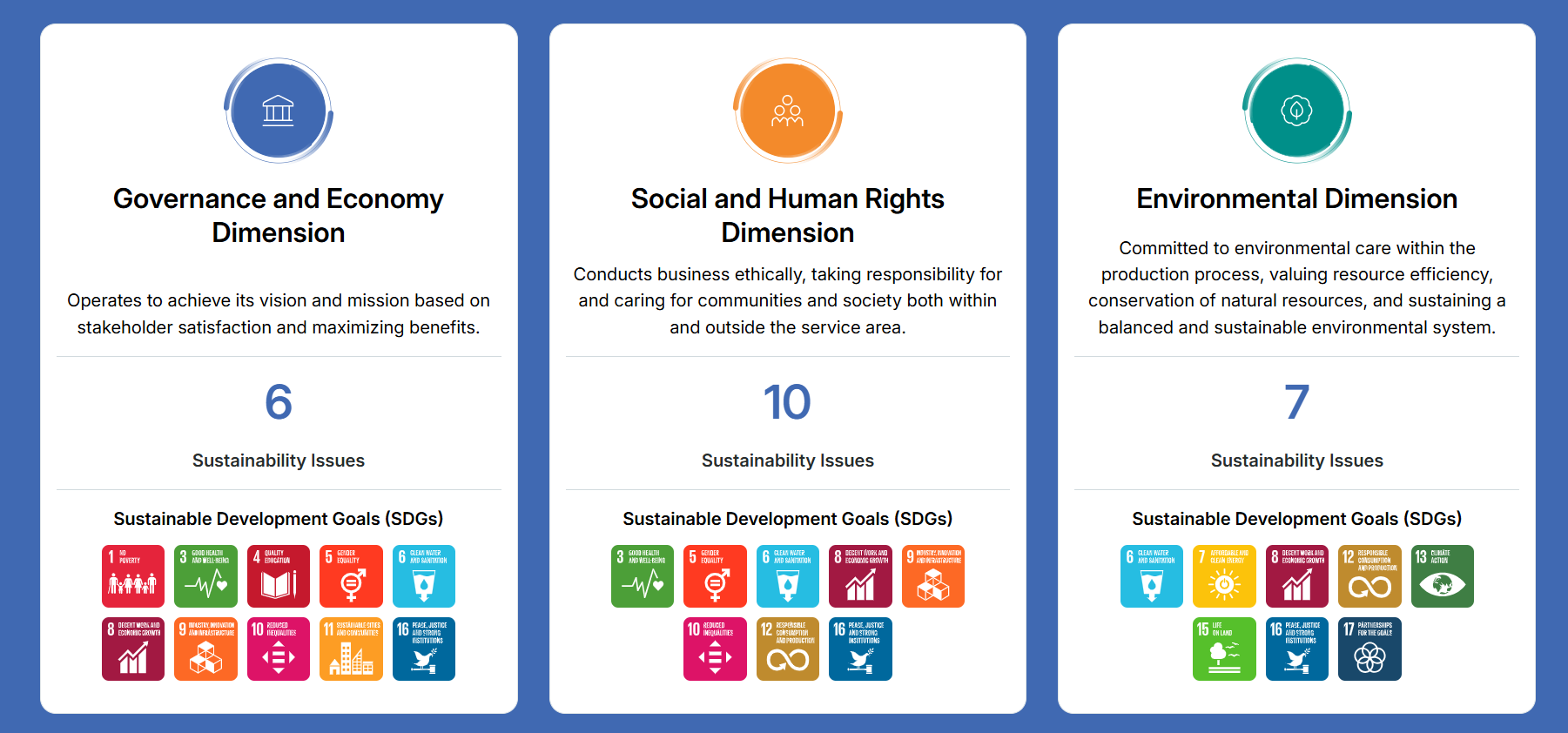
UN Sustainable Development Goals
| SDG Goal |
|---|
| Goal 1 No Poverty |
| Goal 3 Good Health and Well-being |
| Goal 4 Quality Education |
| Goal 5 Gender Equality |
| Goal 6 Clean Water and Sanitation |
| Goal 7 Affordable and Clean Energy |
| Goal 8 Decent Work and Economic Growth |
| Goal 9 Industry, Innovation and Infrastructure |
| Goal 10 Reduce Inequalities |
| Goal 11 Sustainable Cities and Communities |
| Goal 12 Responsible Consumption and Production |
| Goal 13 Climate Action |
| Goal 15 Life on Land |
| Goal 16 Peace, Justice and Strong Institutions |
| Goal 17 Partnerships for the Goals |
Policy Review
Policy Reviewed This Year
Yes
Policy Changed This Year
Yes
Review Details
The Company reviews its sustainability management objectives on an annual basis to ensure alignment with significant changes in relevant factors, taking into account consistency with its business direction and strategies under the Global Reporting Initiative (GRI) framework and the United Nations Sustainable Development Goals (SDGs). These objectives support the Company’s mission to “achieve stable, continuous, and sustainable growth in pursuit of its vision, based on a balanced approach toward customers, employees, business partners, shareholders, communities, and the environment,” and serve as a guiding framework for operations while fostering understanding and accountability among stakeholders.
In 2025, the Company updated its sustainability management objectives, with the revised targets as follows:
To assess greenhouse gas emissions and obtain Carbon Footprint of Product (CFP) certification for three tap water products, namely:
(1) Tap water (Nakhon Pathom/Samut Sakhon)
(2) Tap water (Bang Pa-In Industrial Estate), and
(3) Tap water (Pathum Thani).To achieve net-zero greenhouse gas emissions by 2050.
To record zero cases of human rights violations and no substantiated complaints regarding human rights violations from stakeholders.
Impacts on Stakeholders — Overview
Introduction
Based on the Company’s vision to “be a leading company in Thailand in the water, energy, and environmental businesses,” the Company is committed to conducting environmentally friendly business operations in an integrated manner. Engagement with stakeholders is a key focus that has been consistently carried out in alignment with this vision. Information obtained from stakeholder engagement is incorporated into the Company’s strategic planning, together with other strategic frameworks and planning tools, to effectively respond to the needs and expectations of all stakeholder groups. This approach also aims to create a balance between economic value and shared value generated from business operations, while fostering strong relationships and building confidence between the Company and its stakeholders. The Company has identified six stakeholder groups along its business value chain, prioritized as follows:

Business Value Chain
Value Chain Description
The Company recognizes the importance of maintaining strong relationships with stakeholders across the entire business value chain, from upstream to downstream operations. It is committed to creating value through its products and services in order to meet the expectations of all stakeholder groups. Accordingly, the Company has established guidelines for managing impacts on stakeholders throughout the business value chain, with the objective of fostering sustainable development and achieving a balanced integration of economic, social, and environmental dimensions across the supply chain. This approach is intended to generate long-term value and deliver maximum benefits to all stakeholder groups.
Stakeholder Analysis
Stakeholder Analysis
| Stakeholder Type | Stakeholders | Stakeholder Expectations | Response to Expectations | Communication Activities |
|---|---|---|---|---|
| Internal stakeholders | 2921 · Description: Employees | - Appropriate compensation and benefits
- Occupational health and safety
- Equality and fairness
- Job security and career advancement opportunities
- Respect for human rights
- A positive and supportive working environment | - Review policies on human rights and non-discrimination.
- Review policies on the prevention of harassment or sexual harassment in the workplace.
- Review performance evaluation and compensation practices.
- Enhance employees’ knowledge and capabilities.
- Develop training plans for employees at all levels, including basic sustainability training under the Stock Exchange of Thailand’s ESG DNA program.
- Organize elections for the Welfare Committee and the Occupational Safety, Health, and Working Environment Committee.
- Provide appropriate facilities and a positive working environment.
- Organize various activities, such as safety-related activities, scholarships for employees’ children, monthly birthday celebrations, and New Year events. | 2941 · Description: Online Communication · 2942 · Description: Internal Meeting · 2945 · Description: Complaint Reception · 2946 · Description: Employee Engagement Survey · 2947 · Description: Satisfaction Survey · 2949 · Other name: Management–Employee Engagement Activities. · Description: Others · 2949 · Other name: Communicate relevant information through various channels at an appropriate frequency. · Description: Others · 2949 · Other name: Listen to ideas and feedback through various channels. · Description: Others · 2949 · Other name: Conduct performance evaluations and provide fair compensation. · Description: Others · 2949 · Other name: Enhance employee engagement and participation. · Description: Others |
| External stakeholders | 2936 · Other name: Shareholders / Investors · Description: Others | - Strong operating performance and attractive returns
- Sustainable business growth and expansion of business opportunities
- Transparency
- Effective systems to prevent personal data leakage
- Equality and fairness | - Disclose material information regarding the Company’s operations.
- Ensure transparent, fair, and auditable corporate governance.
- Achieve an “Excellent” rating in the corporate governance assessment.
- Receive a SET ESG Rating of AAA from the Stock Exchange of Thailand.
- Be awarded the Sustainability Disclosure Award 2025 for the seventh consecutive year. | 2938 · Description: Visit · 2941 · Description: Online Communication · 2944 · Description: Annual General Meeting (AGM) · 2949 · Other name: Opportunity Day (Opp Day) · Description: Others · 2949 · Other name: Domestic roadshow activities. · Description: Others |
| External stakeholders | 2923 · Description: Customers | - Tap water of contractual quality, with sufficient and continuous supply
- Accurate and adequate information on products and services
- Fair compliance with contracts or agreements
- Effective systems to prevent personal data leakage
- Ongoing support for customers’ activities | - Supply tap water of contractual quality with sufficient and continuous volume.
- Support the installation of water pipelines and pressure enhancement.
- Conduct meetings to listen to issues and receive complaints.
- Arrange visits to the tap water production process.
- Provide information on raw water quality, tap water quality, and other relevant data through appropriate channels.
- Support training programs to enhance operational capabilities.
- Improve customers’ working facilities.
- Provide educational scholarships for customers’ children.
- Organize social and community activities jointly with customers. | 2941 · Description: Online Communication · 2945 · Description: Complaint Reception · 2947 · Description: Satisfaction Survey · 2949 · Other name: Monitor and report performance in accordance with the water supply purchase and sale agreements. · Description: Others · 2949 · Other name: Customer relationship activities. · Description: Others |
| External stakeholders | 2899 · Description: Suppliers · 2911 · Description: Raw material distributors · 2912 · Description: Product distributors · 2918 · Description: Contractors | - Transparent and fair procurement processes
- Timely and reliable payment
- Effective systems to prevent personal data leakage
- Opportunities for mutual development and sustainable growth
- Participation in problem-solving and the improvement and enhancement of joint working processes | - Comply with the Supplier Code of Conduct (SCOC), covering economic, social, and environmental aspects.
- Conduct business in fair compliance with commercial terms and agreements.
- Exchange views and listen to feedback and recommendations for improvement. | 2938 · Description: Visit · 2947 · Description: Satisfaction Survey · 2949 · Other name: Enter into clear and well-defined contracts for the purchase and sale of goods and services. · Description: Others · 2949 · Other name: Conduct on-site ESG audits for key suppliers and high-risk suppliers. · Description: Others |
| External stakeholders | 2902 · Description: Community · 2928 · Description: Society | - Ensure that the Company’s operations do not adversely affect local communities.
- Enhance the quality of life of communities.
- Promote job security and income stability.
- Support and care for communities during crises and natural disasters. | - Participate in community activities, respect community rights, and care for the surrounding environment.
- Support improvements to buildings, facilities, and learning materials for schools located near water treatment plants.
- Provide educational scholarships to students in service areas on a regular annual basis. | 2940 · Description: Social Event · 2945 · Description: Complaint Reception · 2949 · Other name: Listen to ideas and feedback through various channels. · Description: Others · 2949 · Other name: Assess the impacts of the Company’s business operations on local communities. · Description: Others · 2949 · Other name: Report on the management and resolution of community complaints. · Description: Others |
| External stakeholders | 2936 · Other name: Environmental agencies. · Description: Others | - Participate in problem-solving related to energy conservation and environmental protection.
- Ensure that the Company’s operations do not adversely impact the environment.
- Promote and enhance knowledge on environmental protection and restoration among stakeholders. | - Organize awareness and conservation campaigns for the Tha Chin River and its tributary canals in collaboration with the “We Love Tha Chin River Nakhon Pathom” Club.
- Implement a composting project to promote soil conservation and environmental protection for Wat Lam Phaya School, Nakhon Pathom Province.
- Undertake the Carbon Footprint for Organization (CFO) and Carbon Footprint of Product (CFP) projects, certified by the Thailand Greenhouse Gas Management Organization (Public Organization) (TGO).
- Monitor and safeguard water sources in collaboration with relevant external agencies, such as the Department of Water Resources, the Royal Irrigation Department, the Environmental Protection and Pollution Control Office Region 5, the Metropolitan Waterworks Authority, the Provincial Waterworks Authority, private sector organizations, and the “We Love Tha Chin River Nakhon Pathom” Club. | 2940 · Description: Social Event · 2945 · Description: Complaint Reception · 2949 · Other name: Coordination and communication for water monitoring and surveillance. · Description: Others · 2949 · Other name: Listen to ideas and feedback through various channels. · Description: Others |
Environmental Policy & Guidelines
Introduction
The Company places strong emphasis on sustainable environmental management by establishing environmental and quality policies, objectives, operating guidelines, and performance monitoring mechanisms. Environmental management is regarded as a core organizational responsibility in demonstrating social responsibility through environmentally friendly production processes and service delivery. The Company has also defined key environmental performance indicators to continuously manage and address environmental issues, with the aim of achieving a balance between business operations and the sustainable reduction of environmental impacts, in alignment with the United Nations Sustainable Development Goals (SDGs).
Has an Environmental Policy
Yes
Policy Description
The Company is committed to implementing ISO 9001 and ISO 14001 management systems, with an emphasis on employee participation, to achieve continuous improvement and effective environmental management, as outlined below:
To produce and deliver tap water of quality that meets customer requirements.
To maximize satisfaction among both direct and indirect customers.
To continuously improve the knowledge, competencies, skills, and expertise of all employees, fostering awareness of quality and environmental responsibility, and to promote ongoing environmental awareness among customers, business partners, and relevant stakeholders.
To comply with all applicable laws and regulations relating to environmental issues and occupational health and safety.
To manage waste, prevent environmental impacts arising from the Company’s activities and those of related parties, and optimize the efficient use of energy and resources.
To procure environmentally friendly goods and services in the Company’s business operations.
All employees are responsible for applying the principles of this policy in their daily operations and in setting quality and environmental performance objectives, as well as reporting performance results to management. Management at all levels is responsible for promoting and supporting the implementation of this policy by providing adequate and appropriate resources, including budget, manpower, and time, to ensure that quality and environmental initiatives are carried out in accordance with the established policy, objectives, and targets.
Policy Document Link
https://www.ttwplc.com/en/about-ttw/company-policy#tab-environmental-2
Environmental Guidelines
| Guideline |
|---|
| Electricity Management |
| Renewable/Clean Energy Management |
| Water Management |
| Waste Management |
| Biodiversity Management |
| Greenhouse Gas and Climate Change Management |
| Air Quality Management |
Environmental Policy Review
Policy Reviewed This Year
Yes
Review Details
In 2025, the Company established additional environmental objectives as follows:
Water resource and water quality management: Targets were set for the use of raw water from natural water sources, wastewater, and water reuse.
Waste and waste management: Targets were established to reduce the volume of waste and residual waste.
In addition, the Company formulated a biodiversity policy and reviewed the composition of the Carbon Footprint of Organization working group to align with the organizational structure and roles. The Company also reviewed its approach to assessing greenhouse gas (GHG).
Policies & Guidelines Changed
| Change |
|---|
| Electricity Management |
| Renewable/Clean Energy Management |
| Water Management |
| Waste Management |
| Biodiversity Management |
| Greenhouse Gas and Climate Change Management |
| Air Quality Management |
Energy — Plan & Guidelines
Has an Energy Management Plan
Yes
Plan Description
Energy is a key cost in driving business operations and production processes across industries. However, energy consumption contributes to climate change through greenhouse gas (GHG) emissions, which has become a global concern. Accordingly, the United Nations has established Sustainable Development Goal 7: Affordable and Clean Energy, and Sustainable Development Goal 13: Climate Action, to mitigate the impacts of energy use and GHG emissions.
The Company recognizes and places importance on energy conservation, which is a key production factor for its business operations and activities. Accordingly, the Company has established energy conservation guidelines for employees across the organization to encourage collective participation and consistent practices. These efforts are aimed at reducing operating costs, improving energy efficiency, and lowering greenhouse gas (GHG) emissions in line with government policy as follows:
The Company will implement and continuously develop an appropriate energy management system, integrating energy conservation into its operations in compliance with applicable laws and related requirements.
The Company will continuously improve the efficiency of energy resource utilization in a manner appropriate to its business nature, technologies employed, and good operating practices.
The Company will establish annual energy conservation plans and targets to achieve appropriate reductions in energy consumption, and will communicate these clearly to all employees to ensure proper understanding and implementation.
The Company considers energy conservation to be a shared responsibility of the owner, management, and employees at all levels, who are required to cooperate in implementing the prescribed measures, monitoring performance, and reporting to the energy management working group.
The Company will provide necessary support, including human resources, budget, working time, training, and opportunities for employee participation and feedback, to enhance energy management initiatives.
Management and the energy management working group will review and update the energy policy, objectives, and action plans on an annual basis.
Plan Document Link
https://www.ttwplc.com/en/sustainability/environmental#scrollspy-4
Energy — Electricity Consumption
Electricity Consumption
| Metric | Current Year | Previous Year | Two Years Ago | Remark |
|---|---|---|---|---|
| Total electricity consumption within the organization (Kilowatt-Hours) | 171,670,808 | 180,281,945 | 172,952,180 | |
| Electricity purchased for consumption from non-renewable energy sources (Kilowatt-Hours) | 167,149,229 | 175,890,000 | 168,360,000 | Electricity consumption in 2025: TTW: 98,098,545 kWh PTW: 69,050,684 kWh |
| Electricity purchased or generated for consumption from renewable energy sources (Kilowatt-Hours) | 4,521,579 | 4,391,945 | 4,592,180 |
Energy — Fuel Consumption
Fuel Consumption
| Metric | Current Year | Previous Year | Two Years Ago |
|---|---|---|---|
| Crude oil (Barrels) | |||
| Coal (Metric tonnes) | |||
| Jet fuel (Litres) | |||
| Diesel (Litres) | 75,302.75 | 67,113.74 | 70,706.34 |
| Gasoline (Litres) | 53,238.82 | 75,969.07 | 62,081.07 |
| Fuel oil (Litres) | |||
| Natural gas (Standard cubic feet) | |||
| LPG (Kilograms) | |||
| Steam (Metric tonnes) |
Energy — Targets
Introduction
The Company has set a long-term target to reduce electricity consumption per unit of output at all three water treatment plants by no less than 1% for the period from 2023 to 2025.
Has Set Targets
Yes
Targets
| Target | Base Year | Base Year Value | Target Year | Target Change (%) | Unit |
|---|---|---|---|---|---|
| Reduction of electricity purchased for consumption | 2,024 | 175,890,000 | 2,025 | 1 | Kilowatt-hour |
Energy — Performance & Outcomes
Introduction
In 2025, the Company implemented measures to control electricity consumption in order to reduce greenhouse gas (GHG) emissions resulting from electricity usage, as follows:
Preventive maintenance program for split-type air conditioning systems
Replacement of fluorescent lamps with LED lighting
Procurement of electric vehicles (EVs) to replace pool vehicles
Installation of additional solar cell systems
The implementation of the above measures has been continuously monitored to ensure that electricity consumption and the Company’s greenhouse gas emissions can be effectively controlled and reduced.
Has Performance Results
Yes
Performance Description
The Company has installed a Solar Rooftop system on clear water reservoirs with the objective of reducing electricity consumption and lowering GHG emissions from its operations. In addition, the Company has potential installation areas for solar energy systems, including rooftop solar panels on clear water tanks and floating solar systems at water treatment plants and pumping stations in the Nakhon Pathom–Samut Sakhon service area, as well as the Bang Pa-In project in the Bang Pa-In Industrial Estate, Phra Nakhon Si Ayutthaya Province.
Rooftop Solar Cell System (Data Collection period October 2024 - September 2025)
Business Area | Electricity Generation Capacity (Unit: kilowatt-hours, kWh) | Reduction in GHG Emissions (Unit: tons of CO2 equivalent, tCO2e) |
Water Production Plants and Distribution Stations (Nakhon Pathom - Samut Sakhon service area) | 4,125,573 | 1,960 |
Bang Pa-in Project (Bang Pa-in Indutrial Estate, Phra Nakhon Si Ayutthaya Province) | 251,637 | 119 |
The company has implemented the Floating Solar Cell Project at the wastewater treatment system of Bang Pa-in Industrial Estate. The project involves installing solar power generation systems on the wastewater holding pond, using floating solar panels that do not interfere with normal pond operations. This initiative helps reduce electricity consumption for wastewater treatment, which is currently supplied by the Provincial Electricity Authority (PEA). It also supports GHG emission reduction efforts, aligning with the sustainability policies of the Industrial Estate Authority of Thailand (IEAT) and the government.
Floating Solar Cell System (Data Collection period October 2024 - September 2025)
Business Area | Electricity Generation Capacity (Unit: kilowatt-hours, kWh) | Reduction in GHG Emissions (Unit: tons of CO2 equivalent, tCO2e) |
Bang Pa-in Project (Bang Pa-in Indutrial Estate, Phra Nakhon Si Ayutthaya Province) | 144,370 | 68 |
Water Management — Overview
Introduction
The Company recognizes and places strong emphasis on effective water management to prevent future water scarcity, as it relies on natural water sources as the primary raw material for tap water production, which represents the Company’s main source of revenue. Accordingly, the Company has promoted, supported, and fostered collaboration with communities, government agencies, and relevant organizations to protect and conserve natural water sources. The Company also leverages its business expertise and technical capabilities to continuously address water-related challenges, thereby driving sustainable business operations in alignment with the United Nations Sustainable Development Goal 6: Clean Water and Sanitation, which focuses on ensuring the availability and sustainable management of water and sanitation for all.
Water — Plan & Guidelines
Has a Water Management Plan
Yes
Plan Description
The Company has designed the tap water production system to bring water back into the production process with maximum efficiency based on the principle of Water Discharge Minimization, including measures to control water loss in the production system (Production Loss), and has designed the tap water distribution system (Transmission Loss) to be appropriate, which will not release any water loss, whether it is the water separated from the sludge removal system or the water that has gone through the backwash process of a sand filter. The system is designed to collect sludge from the water production process to separate water from sludge, which is then returned to the water production system again.
Water is essential to our livelihood and is used in the production of tap water to prevent the activities of the Company’s business processes from polluting or affecting the quality of water resources, the Company strictly complies with the requirements of relevant laws, categorizing the Company’s wastewater into two types include wastewater from water use within the office and from other activities within the water treatment plant by establishing a wastewater quality inspection plan before draining to the outside once a year.
Plan Document Link
https://www.ttwplc.com/en/sustainability/environmental#scrollspy-2
Water — Withdrawal, Discharge & Consumption
Water Withdrawal, Discharge & Consumption
| Metric | Current Year | Previous Year | Two Years Ago | Remark |
|---|---|---|---|---|
| Total water withdrawal (Cubic meters) | 321,915,251 | 308,860,079 | 284,350,141 | |
| Total water withdrawal by third-party water (Cubic meters) | 82 | 79 | 141 | |
| Total water withdrawal by surface water (Cubic meters) | 321,915,169 | 308,860,000 | 284,350,000 | Surface water consumption in 2025: TTW: 161,620,662 cubic meters PTW: 160,294,507 cubic meters |
| Total water withdrawal by groundwater (Cubic meters) | ||||
| Total water withdrawal by seawater (Cubic meters) | ||||
| Total water withdrawal by produced water (Cubic meters) | ||||
| Percentage of wastewater treated before discharge (%) | ||||
| Total water discharge (Cubic meters) | ||||
| Total water discharge to third-party water (Cubic meters) | ||||
| Total water discharge to surface water (Cubic meters) | ||||
| Total water discharge to groundwater (Cubic meters) | ||||
| Total water discharge to seawater (Cubic meters) | ||||
| Total water consumption (Cubic meters) | 321,915,251 | 308,860,079 | 284,350,141 | |
| Recycled water (Cubic meters) | 6,422,931 | 6,866,685 | 7,456,617 | Recycled water usage in 2025: TTW: 2,340,443 cubic meters PTW: 4,082,488 cubic meters |
Water — Targets
Introduction
The Company has established the following water management targets:
Raw water consumption per unit of output: Not exceeding 1.04 cubic meters per cubic meter of supplied tap water.
Water reuse ratio: Not less than 2%.
Effluent water quality: 100% compliance with legally prescribed standards.
Has Set Targets
Yes
Targets
| Target | Base Year | Base Year Value | Target Year | Target Year Value | Target Change (%) | Unit |
|---|---|---|---|---|---|---|
| Increase of recycled water for consumption | 2,024 | 6,866,685 | 2,025 | 6,422,931 | 2 | Cubic meters |
Water — Performance & Outcomes
Has Performance Results
Yes
Performance Description
In 2025, the results of wastewater quality inspections and analyses at all water treatment plants complied with the standards prescribed under the Ministry of Industry Notification on Effluent Discharge Control Standards for Factories, issued pursuant to Clause 14 of Ministerial Regulation No. 2 (B.E. 2535) under the Factory Act B.E. 2535. In addition, the Company monitors and safeguards water resources in collaboration with relevant external agencies, including promoting and supporting activities to protect water sources and water quality in the Tha Chin River and surrounding canals, as well as implementing the Bang Sue Canal Water Quality Rehabilitation Project to conserve the Tha Chin River, which is a key raw water source for the Company’s water production operations.
Waste — Plan & Guidelines
Has a Waste Management Plan
Yes
Plan Description
The Company recognizes the potential environmental contamination and safety impacts on stakeholders arising from waste generated throughout its business operations and supply chain, including raw material transportation, production, and the delivery of products and services. Accordingly, the Company places importance on, and continuously complies with, applicable laws and guidance from relevant regulatory authorities to minimize environmental impacts from waste disposal, reduce the volume of waste sent for disposal to the greatest extent possible, and identify opportunities to reuse waste for maximum benefit in accordance with circular economy principles.
The Company manages waste and non-usable materials in accordance with environmental management standards under ISO 14001:2015, and has established an operating manual titled “Management of Waste and Non-Usable Materials.” This manual sets out guidelines to ensure that waste and non-usable materials are managed in compliance with legal requirements and to prevent potential adverse environmental impacts. “Waste and non-usable materials” refer to all waste generated from factory operations, including waste from raw materials, waste arising from production processes, substandard or deteriorated products, and wastewater containing hazardous components or characteristics.
In 2025, the Company promoted plastic reduction under its bottled drinking water project by planning to produce 350-milliliter bottled drinking water using embossed containers without plastic labels (no-label packaging). This initiative supports the reduction of greenhouse gas emissions and helps lower the Company’s costs. The bottled water will be produced and distributed to stakeholders for use in public and community benefit activities.
Plan Document Link
https://www.ttwplc.com/en/sustainability/environmental#scrollspy-3
Waste — Generation, Disposal & Recycling
Waste Generation, Disposal & Recycling
| Metric | Current Year |
|---|---|
| Total waste generated (Kilograms) | 14,769 |
| Non-hazardous waste (Kilograms) | 10,741 |
| Non-hazardous waste - Landfilling (Kilograms) | 9,086 |
| Non-hazardous waste - Incineration (with energy recovery) (Kilograms) | |
| Non-hazardous waste - Incineration (without energy recovery) (Kilograms) | 1,655 |
| Non-hazardous waste - Other disposal operations (Kilograms) | |
| Hazardous waste (Kilograms) | 4,028 |
| Hazardous waste - Landfilling (Kilograms) | 2,400 |
| Hazardous waste - Incineration (with energy recovery) (Kilograms) | |
| Hazardous waste - Incineration (without energy recovery) (Kilograms) | 78 |
| Hazardous waste - Other disposal operations (Kilograms) | 1,550 |
| Total reused/recycled waste (Kilograms) | 26,891 |
| Reused/Recycled non-hazardous waste (Kilograms) | 26,891 |
| Reused non-hazardous waste (Kilograms) | |
| Recycled non-hazardous waste (Kilograms) | 26,891 |
| Reused/Recycled hazardous waste (Kilograms) | |
| Reused hazardous waste (Kilograms) | |
| Recycled hazardous waste (Kilograms) |
Waste — Targets
Introduction
The Company has set the following waste and waste management targets:
No incidents of sludge leakage to external areas
No incidents of lubricant or hazardous chemical spills
100% compliance with legally prescribed standards for the management of waste and waste materials (both hazardous and non-hazardous)
Has Set Targets
Yes
Targets
| Waste Type | Disposal Approach | Target | Base Year | Target Year | Target Year Value | Unit | Per Unit (Intensity) | Per Unit — Please Specify |
|---|---|---|---|---|---|---|---|---|
| Non-hazardous waste | 2759 · Description: Recycle | Reduce waste volume | 2,024 | 2,025 | 0.12 | Kilograms | Cubic meter of product | Cubic meter of product |
Waste — Performance & Outcomes
Has Performance Results
Yes
Performance Description
The Company places importance on systematic and efficient waste and waste management. In 2025, the Company implemented measures to reduce waste at the source, segregate waste by type, reuse or recycle waste, and properly dispose of waste in accordance with applicable laws and environmental standards. As a result, the Company was able to reduce the volume of waste requiring final disposal, increase the proportion of waste reused, and mitigate overall environmental impacts through the following key projects and activities:
No-Label Drinking Water Project: the Company adjusted the packaging of TTW drinking water bottles by using embossed bottles instead of plastic labels (No Label), in support of reducing plastic waste and greenhouse gas emissions, while also lowering packaging costs. TTW drinking water is produced for distribution to stakeholders for use in public benefit and social activities.
Food Waste Composting Project Using an Automatic Food Waste Processor: as most employees at the Company’s head office bring food to work, an average of approximately 3 kilograms of food waste is generated per day, which was previously disposed of together with municipal waste. To enhance waste management efficiency and reduce the burden on public waste disposal, the Sustainability Development Department initiated a project to convert food waste into compost using an automatic food waste processor. This initiative reduced the amount of food waste sent for disposal and encouraged greater employee participation in waste segregation. The resulting compost is a concentrated fertilizer with suitable nutrients, which can be effectively used to maintain ornamental plants and landscaping within the Company’s head office.
Office Waste Segregation Project: the Company continues to implement office waste segregation by providing clearly designated bins for general waste, recyclable waste, and organic waste, along with ongoing communication and awareness-building among employees on proper waste separation at the source. Regular monitoring has resulted in increased reuse and recycling rates, reduced waste sent for final disposal, and more efficient use of resources.
In addition, in 2025, TTW Public Company Limited participated in the “Ting To Trash” waste segregation project organized by the Securities and Exchange Commission (SEC) in collaboration with the Thai Listed Companies Association. The project aims to enhance listed companies’ knowledge and understanding of proper waste segregation at the source, support the reduction of greenhouse gas emissions, and promote environmental disclosure in the 56-1 One Report. The Company actively encouraged employee participation and engagement in internal waste management through education, awareness-building, and fostering environmental consciousness, thereby strengthening an organizational culture that supports long-term sustainable business operations.
Greenhouse Gas — Overview
Introduction
In 2025, the Company prepared its Carbon Footprint for Organization (CFO) report for the fourth consecutive year. For the first time, the reporting was conducted separately for two companies, namely TTW and PTW, covering greenhouse gas (GHG) emissions across all three scopes (Scopes 1–3). The Company engaged Green Style Co., Ltd. as its consultant, with a 12-month data collection period from 1 October 2024 to 30 September 2025.
In addition, the Company measured greenhouse gas emissions in the form of the Carbon Footprint of Product (CFP) for tap water for the first time, with a certification cycle of once every three years for the period 2025–2027. The CFP was verified by the Renewable Energy and Environment Research Center, University of Phayao. The Company also received CFO certification from the Thailand Greenhouse Gas Management Organization (Public Organization) (TGO) for the fourth consecutive year for direct GHG emissions (Scope 1) and energy-related indirect GHG emissions (Scope 2). Furthermore, the Company received CFP certification from TGO for the first time for three products, namely: (1) tap water (Nakhon Pathom/Samut Sakhon), (2) tap water (Bang Pa-In Industrial Estate), and (3) tap water (Pathum Thani).
GHG — Plan & Guidelines
Has a GHG Management Plan
Yes
Plan Description
The Company has plans to reduce electricity consumption from external suppliers, namely the Provincial Electricity Authority, by utilizing electricity generated from solar cell systems. To date, the Company has installed rooftop solar cell systems at the Bang Len Water Treatment Plant, Phutthamonthon Water Distribution Station, Krathum Baen Water Treatment Plant, Maha Chai Water Distribution Station, and the Bang Pa-In Project. In addition, a floating solar cell system has been installed at the Bang Pa-In Project. These initiatives aim to reduce electricity consumption from the Provincial Electricity Authority and to significantly lower energy-related indirect greenhouse gas (GHG) emissions (Scope 2), which account for more than 99% of the Company’s total GHG emissions.
Plan Document Link
https://www.ttwplc.com/en/sustainability/environmental#scrollspy-4
GHG — Emissions
GHG Emissions
| Metric | Current Year | Previous Year | Two Years Ago | Remark |
|---|---|---|---|---|
| Total GHG emissions (Metric tonnes of carbon dioxide equivalent) | 93,357 | 101,602 | 92,785 | In 2025, the Company prepared its Carbon Footprint for Organization (CFO) report for the fourth consecutive year. In that year, the reporting was conducted separately for two companies, namely TTW and PTW. |
| Total greenhouse gas emissions 1 (Metric tonnes of carbon dioxide equivalent) | 387 | 406 | 420 | |
| Total greenhouse gas emissions 2 (Metric tonnes of carbon dioxide equivalent) | 79,397 | 84,510 | 77,135 | Electricity consumption was subject to a change in the emission factor (EF) from 0.4999 kgCO2e per unit to 0.4750 kgCO2e per unit, in accordance with the announcement of the Thailand Greenhouse Gas Management Organization (TGO) dated 26 November 2025. |
| Total greenhouse gas emissions 3 (Metric tonnes of carbon dioxide equivalent) | 13,573 | 16,686 | 15,230 | The acquisition of electricity involved a change in the emission factor (EF) from 0.0987 kgCO2e per unit to 0.0812 kgCO2e per unit, in accordance with the announcement of the Thailand Greenhouse Gas Management Organization (TGO) dated 26 November 2025. |
GHG — Emissions Verification
Introduction
Carbon Footprint of Product (CFP) – Tap Water
Tap water (Nakhon Pathom / Samut Sakhon) GHG emission intensity of 369 grams of CO2equivalent per cubic meter.
Tap water (Bang Pa-in Industrial Estate) GHG emission intensity of 103 grams of CO2equivalent per cubic meter.
Tap water (Pathum Thani) GHG emission intensity of 255 grams of CO2equivalent per cubic meter.
Emissions Verified by a Third Party
Yes
Verifying Body
2656
Verifying Body — Please Specify
Greenhouse Gas Management Certification Unit, School of Energy and Environment University of Phayao
Verification Web Page
https://www.ttwplc.com/en/sustainability/environmental#scrollspy-4
GHG — Principles & Standards
Introduction
The Company has complied with the principles and standards on greenhouse gas management and climate change established by the Thailand Greenhouse Gas Management Organization (Public Organization) (TGO), including the requirements for assessing greenhouse gas emissions under the Carbon Footprint for Organization (CFO) and the Carbon Footprint of Product (CFP) frameworks, as well as obtaining CFO and CFP certifications from TGO.
Principles & Standards Applied
| Standard |
|---|
| 2671 |
GHG — Targets
Has Set GHG Targets
Yes
GHG Targets — Net Zero
Introduction
The Company has set a target to reduce greenhouse gas emissions from its water production operations per unit of output (Scope 1, 2, and 3) by no less than 0.03%
GHG Targets — Other Targets
Other GHG Targets
| Emission Scope | Base Year | Base Year Emissions | Near-term Target Year | Near-term Target Value | Near-term Target Change (%) | Target Year | Target Year Emissions | Target Change (%) | Unit |
|---|---|---|---|---|---|---|---|---|---|
| 2716 | 2,024 | 101,602 | 2,025 | 8,245 | 8 | 2,025 | 8,245 | 8 | Metric tonnes of carbon dioxide equivalent |
GHG — Performance & Outcomes
Has Performance Results
Yes
Performance Description
The Company received Letters of Recognition (LOR) from the Thailand Greenhouse Gas Management Organization (Public Organization) (TGO) under its greenhouse gas reduction support program for two initiatives: 1) The use of electricity generated from rooftop solar panels installed on clear water tanks at the Bang Len and Krathum Baen water treatment plants, as well as at Water Distribution Stations SS2 and SS3. 2) The use of electricity generated from a floating solar cell system at the Bang Pa-In Project, Bang Pa-In Industrial Estate. Based on operational data for the year 2024 (October 2023 to September 2024), these two projects collectively reduced greenhouse gas emissions by 2,129 tons of carbon dioxide equivalent (tCO2e).
The Company received a Letter of Recognition (LOR) for the “Tree Planting for a Greener World and Climate Change Mitigation” initiative, which involved planting a total of 154 trees around the TTW headquarters building (TTW1) and the office building (TTW2) within the Phutthamonthon Water Distribution Station (SS2). This initiative is able to absorb greenhouse gas (GHG) emissions amounting to 30.391 tons of carbon dioxide equivalent (tCO2e).
The Company received a Certificate of Recognition as a CALO Pilot Organization from the Thailand Greenhouse Gas Management Organization (Public Organization), in recognition of the Company’s participation in the Climate Action Leading Organization (CALO) program. The program aims to encourage member organizations of the Thailand Carbon Neutral Network (TCNN) to set a target of achieving Net Zero Greenhouse Gas (GHG) Emissions by 2050, in line with Thailand’s latest commitment to reducing greenhouse gas emissions announced at COP30 in Brazil.
Environmental Legal Incidents
Introduction
Compliance with Environmental Laws and Regulations
The Company recognizes the importance of conducting its business in an environmentally responsible manner and strictly complies with all applicable environmental laws, regulations, and requirements. The Company has implemented an Environmental Management System in accordance with ISO 14001, with a target to conduct at least one internal audit annually to enhance awareness and ensure effective implementation of the environmental management system among employees. The Environmental Management System has been certified to ISO 14001 by SGS (Thailand) Limited.
The Company prepares an annual internal audit plan for the ISO 14001 system and appoints qualified and competent personnel from the environmental management function to act as internal auditors. In 2025, the Company conducted one internal audit of the ISO 14001 system. The audit results were in line with the Company’s objectives, and the Company successfully maintained its ISO 14001 certification by SGS (Thailand) Limited. No cases of non-compliance, violations of environmental laws, significant issues, or material deficiencies in environmental legal compliance were identified.
Legal Violation Incidents
| Metric | Current Year | Previous Year | Two Years Ago |
|---|---|---|---|
| Number of cases or incidents of legal violations or negative environmental impact (cases) | 0 | 0 | 0 |
Other Environmental Management
Introduction
Environmentally Friendly Production Processes for Products and Services
In alignment with global and national economic development trends that promote the transition from a Green Economy toward Sustainable Consumption and Production (SCP) and greenhouse gas reduction, the Company recognizes the importance of implementing environmentally friendly production processes for its products and services. The Company is committed to promoting the production and consumption of eco-friendly products and services (Eco-Products). Key initiatives include green procurement, the use of alternative resources or recyclable materials, and production processes that do not discharge waste such as wastewater or toxic emissions into the environment. In addition, the Company ensures that its production processes do not pose risks to the health and safety of employees and relevant stakeholders.
To support these commitments, the Company has established Quality and Environmental Policies as guidelines for effective environmental management within the organization. The Company also adopts internationally recognized standards for environmental management systems, specifically ISO 14001, to enhance environmental performance and support long-term environmental sustainability.
Environmental Management Training for Employees
The Company encourages employees to participate in training programs related to environmental protection and management. These programs are primarily internal training courses, such as energy management in water production systems, energy conservation through efficiency improvement in motor and pumping systems, and factory environmental management aimed at reducing greenhouse gas emissions, among others.
Plan Description
Biodiversity
The Company is committed to conducting its business sustainably based on environmental responsibility. It places strong emphasis on promoting and preserving biodiversity and ecosystems in order to conserve natural resources so that they remain abundant and can be sustainably passed on to future generations. Accordingly, the Company has established a Biodiversity Policy to serve as a common framework and guideline for consistent implementation across the organization, as follows:
Comply with applicable laws and regulations related to biodiversity, and avoid conducting operations in areas of high biodiversity value or areas with significant biodiversity risks.
Conduct risk and impact assessments arising from the Company’s business operations, including the implementation of control, prevention, and mitigation measures to reduce potential direct and indirect negative impacts on biodiversity.
Enhance knowledge, understanding, and awareness of biodiversity among management, employees, and key stakeholders.
Promote the adoption of innovative, modern, and efficient technologies in business operations to protect the environment, ecosystems, and natural resources, and to maintain their long-term integrity.
Foster both internal and external engagement among management, employees, and key stakeholders by encouraging participation in biodiversity conservation activities.
Monitor, track, and report progress on the implementation of activities aimed at conserving and preserving biodiversity.
The Company adopts a systematic management approach comprising avoidance, impact reduction, restoration, and compensation, covering negative impacts on biodiversity across all three dimensions—water, soil, and air. To this end, the Company has established the following biodiversity management projects and initiatives:
Aquatic ecosystem | Soil ecosystem | Air ecosystem |
Project/Operation: 1) Designing a water supply production system, such as a raw water pumping system to avoid and prevent living things in the Tha Chin River from entering the production system. and production systems to reuse water in the production process with maximum efficiency, by adhering to the principle of Water Discharge Minimization and controlling water loss in the production process (Production Loss) by squeezing water out of the sediment and returning the water back into the production process. This means that throughout the tap water production process, no wastewater is released into natural water sources. 2) Bang Sue Canal Water Quality Restoration Project to conserve the Tha Chin River, by relying on cooperation between the community, government, and companies to restore the water quality of Bang Sue Canal in the Rai Khing raw water pumping station, by installing equipment to improve the quality of Bang Sue Canal water to have better quality before releasing it into the Tha Chin River. | Project/Operation: 1) The design of the sludge dewatering system is a system for removing water from the sludge. To make the sediment as dry as possible which can reduce the number of contaminants and make them more convenient to dispose of 2) Sediment research and development projects develop products such as clay bricks and decorative tiles, etc., which can reduce the amount of sediment that will be disposed of. 3) Composting from the Automatic Food Waste Disposal Machine Project to reduce the amount of food waste that is contaminated with general garbage and send it to municipal agencies for disposal, including compost being able to be used to maintain trees and improve soil quality. 4) Compost project, save the soil, save the environment. for schools near Bang Len Waterworks Plant By mixing sediment with food scraps or organic waste into compost and using it to maintain trees within the school and improve the soil quality. 5) Prepare an operation manual on “handling waste or unused materials” according to the environmental management standard ISO 14001: 2015, which can reduce the number of contaminants and make them more convenient to dispose of. | Project/Operation: 1) Controlling air pollution from the company's work processes, such as inspecting environmental quality, dust released from the exhaust stack of a backup generator, inspecting the condition of vehicles of contractors or outsiders entering and exiting the company's work area, such as checking exhaust fumes. and various conditions of readiness 2) Arrange for inspection of air pollution caused by the use of generators, such as particulate matter (TSP), sulfur dioxide (SO2), nitrogen dioxide (NO2), and carbon monoxide (CO) from the company. Health and Envitech Co., Ltd. 3) Project to assess greenhouse gas emissions from business processes which received Carbon Footprint Organization (CFO) certification from the TGO. 4) Setting targets for reducing greenhouse gas emissions from business processes. 5) Determining measures to reduce electrical energy use, which is an important source of greenhouse gas emissions for the company. 6) Solar Rooftop and Floating Solar Cell project. |
Cooperation in caring for the environment between organizations
To operate a sustainable long-term business, the Company requires collaboration from the community and relevant agencies. Historically, the Company engaged in planning and implementing energy and natural resource conservation projects, partnering with external agencies for initiatives such as water management, waste reduction, and addressing climate change as well as energy conservation. The creation of environmentally friendly projects, dependent on cooperation among related agencies are as follows:
Water Management | Wastewater and unused materials Management |
External projects/Agencies: 1) Organize Restore the Water Quality of Bang Sue Canal to Conserve the Tha Chin River Project in collaboration with Raikhing Municipality, the Environment and Pollution Control Office 5 and the Phasi Charoen water transmission and maintenance project. 2) Activities to take care of the Tha Chin River and the environment with the We Love the Tha Chin River Nakhon Pathom Club | External projects/Agencies: 1) Sludge Research and Development Project for Product Development, conducted in collaboration with the Faculty of Environment, Kasetsart University, and the Laem Phak Bia Environmental Research and Development Project under the Royal Initiative. “Compost for Soil and Environmental Conservation” 2) Project, implemented in collaboration with Thairath Wittaya 4 School, Wat Sukwattanaram School, Wat Weluwanaram School, and Wat Lam Phaya School, located in communities surrounding the Bang Len Water Treatment Plant. 3) Waste Separation Project, implemented in collaboration with the Stock Exchange of Thailand (SET). |
Employee Management — Overview
Introduction
The Company and its subsidiaries have established employee-related policies and prepared employee handbooks to ensure that all employees clearly understand the policies and benefits to which they are entitled. Employees are treated equally and fairly, without exception based on origin, race, religion, gender, marital status, language, or position. The Company does not use or support child labor or human trafficking and does not tolerate corruption or bribery in any form. Opportunities are also provided for persons with disabilities to join the Company. The Company places great importance on human resource management based on integrity and equality, while fostering adherence among employees to corporate standards, values, discipline, and internal regulations, as well as applicable laws and regulatory requirements. This approach aims to motivate and empower employees to drive the organization toward achieving its goal of becoming “a leading national company in water, energy, and environmental businesses.” Accordingly, the Company has established the following guidelines for employee care and human capital development:
Manage human resources efficiently and fairly in accordance with applicable laws and relevant international labor standards.
Promote the development of employees’ knowledge and skills in line with the employee capability development plan, and encourage creativity and innovation through Kaizen activities.
Support an effective occupational health and safety management system by establishing operating manuals and safety standards appropriate to workplace risks, and fostering a strong safety culture throughout the organization.
Establish human rights and labor policies and promote compliance with international human rights principles, based on equality and non-discrimination.
Enhance employee satisfaction and the quality of life of communities surrounding the Company’s operating areas.
Encourage engagement between the Company, communities, and relevant stakeholders to build strong relationships, mutual understanding, and cooperation, thereby reducing potential conflicts in the future.
Employees — Plan & Guidelines
Introduction
Employee Care Strategy
Continuously develop and enhance employees’ knowledge and capabilities. The Company establishes job structures and career development plans to prepare employees for advancement to higher positions.
Implement fair employment practices without discrimination based on gender, race, or religion. In considering promotions and transfers, employees with strong performance and the potential to develop capabilities aligned with job requirements are given the opportunity to be nominated as candidates for appointment by the management in a transparent and fair manner.
Provide employee welfare in accordance with legal requirements and additional benefits that respond to employees’ needs, such as medical benefits, life and health insurance, provident fund, and scholarships for employees’ children.
Emphasize employee safety by providing training on various aspects of workplace safety.
Manage compensation in alignment with individual performance. The Company regularly benchmarks and reviews its compensation practices against those of companies within the same industry on an annual basis to ensure that remuneration remains competitive and consistent with the Company’s operating performance.
Has an Employee Management Plan
Yes
Plan Description
Workforce Planning and Recruitment
The Company places importance on workforce planning and the recruitment and selection of employees from both internal and external sources to join the organization. This is a key process that requires proper preparation and execution in order to achieve the Company’s vision and objectives. The Company promotes equality regardless of gender, age, race, religion, or educational background, and also supports and enhances the quality of life of persons with disabilities by making contributions to the Fund for the Promotion and Development of the Quality of Life of Persons with Disabilities in accordance with Section 34. As there are no indigenous peoples or ethnic groups residing or settled in the Company’s operating areas, the Company has not employed individuals from such groups. In addition, the Company recruits qualified and capable personnel to align with future business directions, while building a positive corporate image through various channels to attract younger generations to recognize and aspire to work with the organization.
Inequality and Discrimination Issues
The Company clearly expresses its commitment not to engage in or support discrimination in employment practices, including recruitment, wages and remuneration, employee benefits, training and development opportunities, promotion or job positions, as well as termination or retirement, on the basis of nationality, race, religion, language, age, gender, marital status, sexual orientation or personal views on gender, disability, HIV status, political affiliation, or other personal beliefs. The Company does not obstruct, interfere with, or take any action that may affect employees’ exercise of their rights or practices related to the above matters, provided that such actions do not cause harm to the Company.
Freedom of Association and Collective Bargaining
The Company provides opportunities for freedom of communication between management and employees in negotiations regarding employee welfare and benefits through the Human Resources and Administration Department and the Welfare Committee at the workplace, which is established in accordance with the Labor Protection Act B.E. 2541 (1998). Currently, there are 321 employee representatives serving as members of the Welfare Committee, representing 100% of total employees, who meet regularly with management. This reflects the Company’s support for labor rights in line with the Universal Declaration of Human Rights and the UN Guiding Principles on Business and Human Rights (UNGP). Such collaboration between employee representatives and management contributes to the effective development of employee welfare and benefits, ensuring that employees’ needs are appropriately and adequately addressed.
In addition, the Company has established whistleblowing and complaint channels for human rights issues, as well as legal and ethical concerns, accessible to both employees and stakeholders. Protection mechanisms for whistleblowers are in place through a confidential information system that restricts access to authorized personnel only. An investigation committee, comprising representatives from departments with no conflict of interest in the matter, is appointed to review and investigate complaints in accordance with the Company’s regulations, and to report the outcomes to the complainants. The Company has clearly defined channels for receiving complaints and whistleblowing reports.
Plan Document Link
https://www.ttwplc.com/en/sustainability/social-and-human-rights-dimension#scrollspy-1
Plan Areas
| Plan Area |
|---|
| Fair employee compensation |
| Employee training and development |
| Promoting employee relations and participation |
| Occupational health and safety in workplace |
Employees — Workforce
Introduction
Employment and Respect for Human Rights
Employees are regarded as valuable assets of the organization. The Company has therefore established an employment management system to ensure that employees are protected and treated fairly, which in turn contributes to a good quality of life and effective work performance. The Company has formulated human rights and labor policies and disclosed them on its website to serve as guidelines for compliance with Thai labor standards, labor laws, and other relevant regulations, as well as to support continuous improvement and development of work practices. In addition, the Company has established a Personal Data Protection Policy to clarify its approach to protecting personal data and the privacy of stakeholders. The Company has incorporated human rights considerations into its employment practices as follows:
Type of Labor | Human rights issues |
1.Child Labor | The Company is not hiring, neither is involved nor has ever encouraged the use of child labor under the age of 15 years old, nor has it provided or encouraged the use of child labor in hazardous work or in a hazardous environment. |
2.Forced Labor | The Company does not employ and encourage forced labor, such as involuntary work by means or justification for punishment or coercion, intimidation, compulsion to work, or providing services resulting in a person’s work reluctantly or by putting the person in an inviolable environment. |
3.Illegal Foreign Labor | The Company does not employ and does not encourage the use of unlicensed foreign workers or illegal immigration. |
4.Pregnancy Labor | The Company does not allow pregnant employees to perform work that is harmful to health or physically as required by law and provides them with work or in an environment suitable for pregnancy, including no termination of employment, reduction of position or any benefits due to pregnancy. |
Employees with Disabilities — Introduction
The Company has undertaken actions relating to the employment of persons with disabilities or other disadvantaged groups in compliance with the Empowerment of Persons with Disabilities Act. In this regard, the number of persons with disabilities employed was zero, as the Company did not directly employ such persons and instead made contributions to the Fund for Empowerment of Persons with Disabilities in accordance with Section 34 of the Act. The Company collaborated with the Nakhon Pathom Provincial Labour Office to subcontract work to caregivers of persons with disabilities. This initiative aimed to promote employment opportunities for caregivers of persons with disabilities and to support a project of the Ministry of Social Development and Human Security, which grants employers or business operators the right to subcontract work to persons with disabilities or their caregivers pursuant to Section 35 of the Empowerment of Persons with Disabilities Act B.E. 2550 (2007).
In 2025, the Company and its subsidiaries had no disputes, lawsuits, or complaints related to human rights violations or issues involving non-compliance with laws and the code of business conduct toward employees, customers, business partners/contractors, communities, or other relevant stakeholders. This reflects the Company’s commitment to addressing matters of importance to the business sector and to establishing operational guidelines that are fully aligned with comprehensive human rights protection principles in accordance with international standards and applicable national laws.
Provident Fund — Introduction
The Company has established a provident fund as an employee welfare benefit to provide financial security in cases of retirement, resignation, termination, disability, or death. The fund is financed by contributions deducted from employees’ income, with additional contributions made by the Company in accordance with the terms and conditions stipulated in the provident fund regulations. Kasikorn Asset Management Company Limited has been appointed as the fund manager.
Workforce Data
| Metric | Current Year | Previous Year | Two Years Ago |
|---|---|---|---|
| Total number of employees (Persons) | 319 | 321 | 322 |
| Number of male employees (Persons) | 262 | 265 | 266 |
| Number of female employees (Persons) | 57 | 56 | 56 |
| Total employment of disabled persons (people) | 1 | 1 | 1 |
| Total disabled employees (people) | 1 | 1 | 1 |
| Total male disabled employees (people) | 1 | 1 | 1 |
| Total female disabled employees (people) | 0 | 0 | 0 |
| Total disabled workers who are non-employee (people) | 0 | 0 | 0 |
| Contributions to the fund for promoting and improving the quality of life for disabled persons | 1 | 1 | 1 |
| Total number of male employees in operational level (Persons) | 243 | 247 | 246 |
| Total number of male employees in management level (Persons) | 14 | 14 | 15 |
| Total number of male employees in executive level (Persons) | 5 | 4 | 5 |
| Total number of female employees in operational level (Persons) | 40 | 39 | 39 |
| Total number of female employees in management level (Persons) | 15 | 15 | 14 |
| Total number of female employees in executive level (Persons) | 2 | 2 | 3 |
Employees — Remuneration & Provident Fund
Remuneration & Provident Fund
| Metric | Current Year | Previous Year | Two Years Ago |
|---|---|---|---|
| Total disabled employees (people) | 173,756,000 | 173,613,000 | 165,799,297 |
| Total male employee remuneration (Baht) | 128,097,000 | 128,057,000 | 119,858,727 |
| Total female employee remuneration (Baht) | 45,659,000 | 45,556,000 | 45,940,570 |
| Number of employees eligible to participate in PVD (persons) | 314 | 314 | 312 |
| Total number of employees joining employee provident fund (Persons) | 309 | 307 | 306 |
| Percentage of total number of employees joining employee provident fund to total number of employees (%) | 96.87 | 95.64 | 95.03 |
| Number of PVD members / Total eligible employees (%) | 98.41 | 97.77 | 98.08 |
| Total amount of provident fund contributed by the Company (Baht) | 11,350,000 | 11,209,000 | 10,771,000 |
| Total amount of provident fund contributed by employee (baht) | 13,829,000 | 13,811,000 | 13,288,000 |
Employees — Training & Development
Introduction
The Company places strong emphasis on human resource development, particularly in enhancing professional skills. It focuses on developing functional and technical competencies in specialized areas through Learning Centers within the water production business across its operating areas. This approach supports the continuous development of in-depth skills in the Company’s core business. In addition, the Company promotes leadership development among executives and employees in each business area to strengthen their knowledge and management capabilities in their respective responsibilities.
The Company has implemented a professional human resource management framework to maximize employee potential and capabilities by providing appropriate learning programs from the first day of employment through retirement. Employees at all levels are encouraged to continuously enhance their knowledge and acquire new skills, including participation in training programs and seminars conducted by leading institutions. To ensure that executives and employees can perform their duties efficiently and effectively in alignment with the Company’s strategies and objectives, the Company has established structured development frameworks tailored to each functional area.
Organization Level |
|
Individual Level |
|
Primary Level |
|
In 2025, the Company enhanced its employee development practices to align with the skills required for the future. Various training programs were organized to strengthen employees’ competencies, enabling them to acquire new skills and apply them to improve their work processes. These initiatives help increase operational efficiency and better prepare the organization to adapt to future changes. Examples of such training programs include:
Enhancing Work Efficiency with AI
Effective Communication and Teamwork
Cyber Security
Problem Solving and Decision Making Techniques
Techniques and Skills for Working with Multi-Generational Teams
Feedback Techniques for Supervisors
Training Data
| Metric | Current Year | Previous Year | Two Years Ago |
|---|---|---|---|
| Average employee training hours (Hours / Person / Year) | 22 | 20 | 15 |
| Employee development and training expenses (baht) | 1,794,103.06 | 1,291,999 | 697,217 |
Employees — Occupational Health & Safety
Introduction
Work Safety
The company has formulated policies and managerial structure for occupational safety, health, and environment in accordance with the standards stipulated in the Occupational Safety, Health and Environment Act B.E. 2545 and other work safety-related laws. We use these as basic practical guidelines to help our employees to ensure safety standards in their works ISO 9001 and ISO 14001, and a work safety management system by focusing on the participation of personnel. In addition, there are rules for working safety, Committee for Safety, Occupational Health, and Working Environment in order to consider the policy Operation plan and work safety training plans.
Occupational Health and Safety
TTW realizes that occupational safety and health programs are an integral part of the business operation and are directly related to both qualitative and quantitative productivity. Its implementation also leads to a sustainable coexistence with the surrounding communities. The company, therefore, focuses the efforts on creating knowledge, understanding, realization, and conscience on occupational safety and health in all departments and among all levels of staff, including senior executives and operational-level staff. The company has formulated policies and managerial structures for occupational safety, health, and environment in accordance with the standards stipulated in the Occupational Safety, Health and Environment Act B.E. 2545 and other work safety-related laws. We use these as basic practical guidelines to help our employees to ensure safety standards in their work.
Safety, Occupational Health, and Work Environment Policy
The executives realize the importance of safety, which consists of work safety, occupational health, work environment, security of system (machinery, equipment, and production processes), and security of buildings, which are the basis of efficient and effective management, leading to sustainability in business operations under the following actions:
The company will support the resources in terms of personnel, time, and budget to encourage and motivate the safety inspection training and other activities to improve working conditions and environment to be safe and create safety awareness.
The company will prevent accidents and illnesses at work as well as nuisance incidents by focusing on risk management and loss control.
The company will assess the safety performance and review the policy on safety, occupational health, and work environment at least once a year.
Safety is the first duty and responsibility of all employees. All employees must participate in activities related to safety, occupational health, and work environment.
All employees must consider the safety of themselves and others while working.
The company will comply with the law and requirements as well as the international standards related to safety, occupational health, and work environment, which are considered the basic criterion.
Identify, assess, and control risks in safety, occupational health, and work environment, including collecting dangerous information that causes the mentioned risks.
Be prepared and able to deal with any incidents that may occur as well as respond to incidents and recover after an incident efficiently to ensure that those incidents will not affect the personnel and internal and external assets of the company and enable the company to conduct its business continuously and quickly.
The executives of all departments are responsible for promoting and supporting the implementation of policies on safety, occupational health, and work environment.
Occupational Safety in the Company Group
For the supervision and inspection of operations, to ensure safety standards are being met and that any accidents that could cause damage to a person or property while working with the Company are prevented or their effects minimized, the following occupational safety guidelines and rules have been established:
Clothing must be well-fitted and suitable for safe operation.
Personal protective equipment (PPE) must be worn in all specified work areas or job types.
The use of drugs, alcohol, or intoxicants is prohibited anywhere in the factory area. If intoxicated, do not enter the factory premises.
No smoking on the factory premises, except for in designated areas only.
No sparks are allowed on factory premises without prior permission from responsible parties.
Do not use company machinery and/or equipment without receiving prior permission from the responsible parties.
The machine must turn off completely and hang a sign. “Danger! Do not operate the machine” at the point where the machine is repaired or cleaned every time.
Do not hang, swing, or climb on forklifts. These are not for passenger transportation.
Do not tease, joke, and/or take any action which may cause danger to oneself or others or Company property.
Do not use air that is part of the operations of machinery or equipment to dry your body, clothes, personal belongings, or anything else.
Any areas marked with “No entry without permission” signs are strictly prohibited from entry by any non-related parties.
Work permits are required before starting any high-risk operation as stipulated by the Company.
Do not work or operate alone in any job that specifies more than one person is required.
Do not pull or press the fire alarm without due cause.
Report to a supervisor in any case whatever of a fire, accident, or near-accident.
All employees and stakeholders in the TTW Public Company Limited group must strictly comply in the event that an investigation identifies any violation with cause for punishment according to personnel management rules and regulations for employees and/or the manual for safe work procedures.
Safety, Occupational Health, and Environment Committee
TTW has elected and appointed the Occupational Safety, Health, and Environment Committee to perform the duties that include the formulation of policies, action plans, and training on occupational safety in order to prevent and decrease the number of occupational accidents, injury, illness, suffering, or unsafety. The Committee’s duties also include the submission of reports and recommendations on measures or guidelines to improve or correct the occupational safety standards so that they are in compliance with the occupational safety-related laws and occupational safety standards to the management. This is to ensure occupational safety for employees, contractors, and third parties who perform their works or use the services of the company, including the survey on occupational safety performance, the reviewing of injury statistics, the setting of occupational safety reporting system. The company requires that employees at all levels comply with the guidelines under the supervision of the Safety, Occupational Health, and Environment Committee that composes of 1 Chairman and 4 Committees.
The environment in the workplace
The Company allocated space in proportion and ensuring it is always clean, Work desks are arranged with space for employees to work conveniently, and there is sufficient personal space between each employee's desk, measuring light in the workplace to be appropriate for both natural light and light bulbs, providing an air purifier, arranging a common area with amenities for employees such as edutainment, relax corner and canteen.
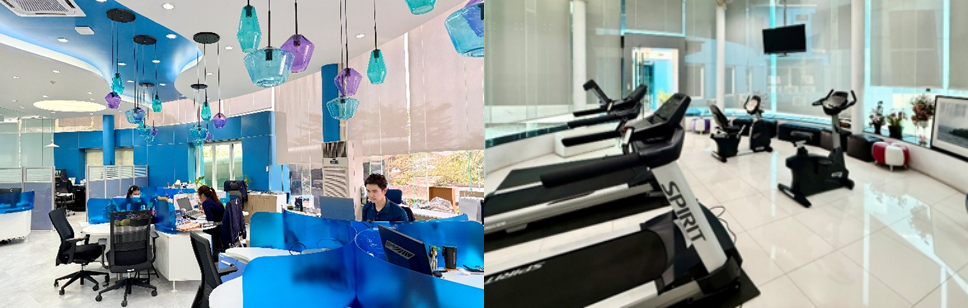
Occupational Health & Safety Data
| Metric | Current Year | Previous Year | Two Years Ago |
|---|---|---|---|
| Total number of lost time injury incidents by employees (Cases) | 0 | 0 | 0 |
Employees — Labour Relations
Labour Relations Data
| Metric | Current Year | Previous Year | Two Years Ago |
|---|---|---|---|
| Total voluntary resignations (Persons) | 16 | 16 | 14 |
| Male employees who voluntary resigned (Persons) | 16 | 14 | 12 |
| Female employees who voluntary resigned (Persons) | 0 | 2 | 2 |
| Percentage of employee turnover leaving the Company voluntarily (%) | 5.02 | 4.98 | 4.35 |
| Evaluation result of employee engagement | 1 | 1 | 1 |
Employees — Employee Representation
Employees Are Represented Collectively
Yes
Forms of Representation
| Form |
|---|
| Welfare committee |
Employees — Targets
Has Set Employee Targets
Yes
Targets
| Indicator | Target Areas | Base Year | Target Year | Target Year — Description |
|---|---|---|---|---|
| Employment Rate | 2983 · Description: Fair employee compensation | 2,024 | 2,025 | Achieved as Planned not less than 80% |
| Employee Turnover Rate | 2983 · Description: Fair employee compensation · 2985 · Description: Promoting employee relations and participation | 2,024 | 2,025 | The employee turnover rate shall not exceed 4%. |
| Employee satisfaction survey results | 2985 · Description: Promoting employee relations and participation | 2,024 | 2,025 | Employee satisfaction survey results not less than 70% |
| Occupational health and safety training | 2988 · Description: Safety and occupational health at work | 2,024 | 2,025 | Employee safety training coverage reached 100% |
Employees — Performance & Outcomes
Has Performance Results
Yes
Performance Description
The Company places importance on fair and transparent workforce management in compliance with relevant labor laws. The Company focuses on creating an appropriate working environment, ensuring employee welfare and occupational safety, as well as continuously developing employees’ capabilities and engagement.
The Company conducts workforce planning and recruitment from both internal and external sources, taking into consideration the principles of equality and non-discrimination regardless of gender, age, race, religion, or educational institution. In addition, the Company supports and promotes the quality of life of persons with disabilities by outsourcing certain tasks to persons with disabilities or their caregivers in accordance with Section 35 of the Empowerment of Persons with Disabilities Act B.E. 2550 (2007). Employees are recruited based on their qualifications and capabilities in a fair and transparent manner. In 2025, the Company recruited a total of 13 employees.
The Company also promotes employee participation, effective internal communication, and the development of essential skills in alignment with the Company’s direction and strategies. As a result, employees possess the knowledge, capabilities, and motivation to perform their duties effectively, while maintaining a good quality of working life. These are important factors in driving the Company’s sustainable growth through various activities, such as the annual outing, monthly birthday celebrations and gift presentations, activities during festivals such as Songkran and Christmas, the New Year party, study visits, BMI My Challenger activities, and sports club activities including running, badminton, and aerobics.
In 2025, the employee satisfaction survey result was 79 percent, based on responses from 224 employees, representing 71 percent of eligible employees who were entitled to complete the survey (employees with at least six months of service).
Customer Management — Overview
Introduction
The Provincial Waterworks Authority (PWA) is the Company’s key customer and a significant stakeholder. The Company places great importance on communicating essential information through its business processes and close contract management, as well as on fostering operational collaboration. Emphasis is placed on effective communication of relevant information among the Company, the PWA, and water consumers to support the provision of water supply services that are of high quality, sufficient, and continuous.
Customers — Plan & Guidelines
Introduction
The Company has established a customer management plan aimed at continuously strengthening relationships and cooperation with the Provincial Waterworks Authority (PWA) and water consumers through systematic, transparent, and auditable communication. Regular performance review meetings are held to assess results, identify issues, and jointly determine improvement measures. The Company conducts proactive communication to provide timely information on key matters, service disruptions, and maintenance activities in order to minimize impacts on customers’ operations. It also supports PWA’s initiatives to expand service areas and increase new water users, while building confidence in the quality and continuity of its services. In addition, the Company monitors customer satisfaction, gathers feedback, and continuously improves its processes to enhance service quality and support the long-term sustainability of the organization.
Has a Customer Management Plan
Yes
Plan Description
The Company fulfills its obligations to customers as a producer and distributor of potable water by adhering to customer-oriented principles. It is committed to delivering products and services that are clean, sufficient, and continuously supplied, based on fairness, transparency, and verifiability, and free from fraud, bribery, and corruption. The Company also aims to foster long-term and sustainable relationships with its customers. These commitments are formalized through customer policies and practical guidelines governing responsible and ethical conduct toward customers.
Providing customers with accurate, sufficient, and timely information regarding products and services
Strictly complying with all terms and conditions agreed with customers
Communicating with customers in a courteous, effective, and reliable manner
Establishing systems and processes that allow customers to lodge complaints regarding product and service quality, quantity, safety, delivery timeliness, and responsiveness, and ensuring prompt and thorough resolution of such complaints
Protecting customer confidentiality and personal data in accordance with the Personal Data Protection Act (PDPA), and refraining from using customer information for improper personal or related-party benefits
Neither requesting, accepting, nor offering any benefits that may indicate dishonest or unethical conduct toward customers
Plan Document Link
https://www.ttwplc.com/en/sustainability/governance-and-economy-dimension#scrollspy-4
Plan Areas
| Plan Area |
|---|
| Responsible production and services for customers |
| Communication of product and service impacts to customers/consumers |
| Development of customer satisfaction and customer relationship |
| Protection of customer personal information |
Customers — Satisfaction Results
Introduction
The Company recognizes the importance of providing quality services to its customer, the Provincial Waterworks Authority (PWA), in the Samut Sakhon–Nakhon Pathom area and the Pathum Thani–Rangsit area. The Company conducts customer satisfaction surveys on a semi-annual basis and consolidates the results annually to utilize the findings for continuous improvement and enhancement of product quality and service efficiency. The customer satisfaction target is set at no less than 91%.
In 2025, the Company successfully conducted the customer satisfaction survey. The results showed an average satisfaction score of 96% across all evaluation criteria, exceeding the target by 5%.
Overall customer satisfaction was assessed at a satisfactory level, in line with the Company’s operational objectives for service quality and customer relationship management. The Company has analyzed the assessment results and customer feedback to define systematic measures for continuous improvement and ongoing enhancement of its services.
Customer Satisfaction Results
| Metric | Current Year | Previous Year | Two Years Ago |
|---|---|---|---|
| Evaluation results of customer satisfaction | 1 | 1 | 1 |
Customers — Targets
Introduction
The Company will use the results of customer satisfaction surveys in various aspects to further improve the efficiency of its operations. These findings are incorporated into action plans implemented through customer relationship activities, with a focus on coordination, close collaboration with customers, and providing support to resolve issues and mitigate potential impacts. This approach aims to enhance the Company’s operational performance and continuously improve customer satisfaction.
Has Set Customer Targets
Yes
Targets
| Indicator | Target Areas | Base Year | Base Year — Description | Target Year | Target Year — Description |
|---|---|---|---|---|---|
| Customer satisfaction with the Company’s operations is not less than 91%. | 3009 · Description: Development of customer satisfaction and customer relationship | 2,024 | Customer satisfaction surveys are conducted twice a year | 2,025 | Customer satisfaction surveys are conducted twice a year |
Customers — Performance & Outcomes
Has Performance Results
Yes
Performance Description
The Company continuously implements its customer management plan and regularly holds performance review meetings with the Provincial Waterworks Authority (PWA) to review operational results, receive feedback, and jointly determine corrective actions. This collaborative approach enhances coordination efficiency and improves the effectiveness of service issue resolution.
The Company also conducts proactive communication through appropriate and timely channels to inform customers of situations that may affect water usage, such as system maintenance activities and emergency disruptions. These efforts help mitigate potential impacts on the production processes and operations of industrial and commercial water users. In addition, the Company has expanded its cooperation in supporting PWA initiatives aimed at increasing the number of new water users and facilitating public access in target areas, thereby improving the convenience and coverage of potable water services. As a result, customer and water user confidence in the quality, adequacy, and continuity of water supply services has been strengthened, along with the Company’s corporate image in terms of social responsibility and professional service delivery. Overall, the Company’s customer management performance has contributed to higher customer satisfaction, more effective communication, fewer complaints, and the promotion of sustainable, long-term collaborative relationships.
The Company has implemented a systematic approach to customer management through continuous service performance monitoring, regular meetings with relevant parties, and proactive communication to provide timely information and promptly resolve service disruptions. These efforts have enhanced coordination efficiency, minimized impacts on water users, and supported the continuous expansion of service areas. Overall customer satisfaction remains at a satisfactory level, reflecting strong confidence in the quality and reliability of the Company’s services.
In 2025, there were no disputes or legal claims between the Company and its subsidiaries and customers. In the water production and distribution business, the Company was able to supply water to customers in accordance with contractual requirements, with overall water supply readiness exceeding the minimum levels specified in the water purchase agreements. The Company was also able to produce tap water in compliance with World Health Organization (WHO) standards. Based on customer satisfaction surveys, customers were satisfied with the Company’s operations, with an overall average satisfaction score of 96%.
Community & Social — Overview
Introduction
The Company believes that strong societies and communities form a vital foundation for national development and the ability to adapt to change. Accordingly, the Company is committed to fostering sustainable prosperity in every region and community where it operates, with a strong focus on improving quality of life and promoting sustainable social development. Social responsibility has long been a core principle guiding the Company’s business operations. The Company is dedicated to growing its business in parallel with social development and the enhancement of quality of life, while giving due consideration to issues that affect people’s livelihoods and well-being. These efforts aim to strengthen economic resilience and reduce social inequality. As the Company is engaged in the production and distribution of tap water for the Provincial Waterworks Authority (PWA), using raw water sourced from natural water resources, it recognizes that water is a critical natural resource that may face scarcity and could affect community water use in the future. In line with its commitment to social responsibility and environmental stewardship, the Company continuously organizes social and environmental initiatives in collaboration with local communities. These activities are intended to foster positive relationships with surrounding communities and to operate as a responsible and trusted neighbor, while ensuring sustainable business operations in the long term.
Community & Social — Plan & Guidelines
Introduction
Operating Approach
The Company is committed to being an organization that drives national economic growth and infrastructure development to international standards by delivering high-quality public utility systems, while maintaining a balanced approach to social responsibility and environmental stewardship. The Company places strong emphasis on communities surrounding its water production plants and supports and develops initiatives covering education, livelihood creation, public health, and environmental conservation to enhance the quality of life of community members. The Company’s social operations are carried out across three key dimensions as follows:
1. Human Resource Development
Community development focuses on community empowerment, enabling communities to strengthen their own potential through the integration of people, knowledge, and resources. This approach fosters relationships centered on learning, management, and development, with education as a fundamental principle to enhance knowledge, critical thinking, and self-reliance in all aspects of life. Accordingly, community development aims to build comprehensive human capacity, equipping individuals with the readiness and capability to address their own challenges and needs, and to collaborate effectively with communities and relevant stakeholders. The ultimate goal is to achieve sustainable community development where people are happy, enjoy a good quality of life, and maintain long-term community resilience.
2. Quality of Life in the Community
The Company places importance on promoting and improving community well-being by supporting access to basic needs, good health, and improved living standards. In addition, the Company seeks to enhance local economic and social development by leveraging local wisdom to create value-added local products and services, thereby generating employment and income opportunities. This approach enables communities to achieve sustainable self-reliance and long-term economic stability.
3. Natural Resource Conservation and Environmental Protection
Natural resource and environmental conservation refers to the prudent and efficient use of natural resources to maximize benefits while minimizing environmental impact. This includes extending the useful life of resources, reducing environmental degradation, and ensuring equitable resource utilization. Given the increasing degradation of natural resources and environmental quality, conservation efforts also encompass environmental quality improvement and restoration, ensuring sustainable use of natural resources for present and future generations.
Has a Community & Social Plan
Yes
Plan Description
1. Education Support Programs
The Company places strong emphasis on promoting learning and enhancing knowledge and skills, as well as contributing to the reduction of educational inequality in Thai society. Accordingly, the Company prioritizes educational support initiatives aimed at mitigating such impacts, as part of its contribution to achieving the United Nations Sustainable Development Goal on Quality Education (SDG 4). The Company implements various education support programs, including the provision of scholarships to students in service areas, research grants for university students, and the transfer of business knowledge and practical experience. Additional initiatives include the development of public utility systems, landscape and environmental improvements, renovation of school buildings, and support for modern teaching and learning materials. These efforts aim to enable schools and educational institutions in underserved and budget-constrained areas to become more self-reliant and to enhance their capacity for human capital development. The programs also support adaptation to rapid social changes, particularly by preparing youth to grow into capable and high-quality adults who can contribute to the country’s long-term economic development.
2. Clean Drinking Water Support Programs
The Company recognizes the importance of reliable public utility systems for communities, as schools and communities in its service areas continue to face challenges related to the shortage of clean water for both consumption and daily use. Therefore, the Company focuses on clean drinking water support initiatives to help alleviate such challenges, contributing to the achievement of the United Nations Sustainable Development Goal on Clean Water and Sanitation (SDG 6). The Company undertakes clean drinking water support projects such as the production of bottled drinking water using a Reverse Osmosis (RO) filtration system, which has been certified for production processes and products by the Thai Food and Drug Administration (FDA) since 2008. This bottled water is provided to support public benefit activities for stakeholders and communities within service areas. In addition, the Company installs drinking water filtration systems in schools facing shortages of clean water for consumption. These systems not only provide students and school personnel with access to clean drinking water and help reduce expenses associated with purchasing water, but also extend services to nearby communities. The Company also supports the provision of tap water to communities surrounding water production plants that experience water shortages during drought conditions.
3. Circular Economy Programs
In response to the growing challenges of waste generation and global resource scarcity, the Company has adopted circular economy principles as a key component of its sustainable development strategy and as a guiding framework for social and community initiatives. These efforts contribute to the achievement of the United Nations Sustainable Development Goal on Responsible Consumption and Production (SDG 12). The Company believes that maximizing resource efficiency under circular economy principles enables more effective use of natural resources, reduces unnecessary waste generation, and helps mitigate resource scarcity through reuse and recycling, thereby creating long-term social value. Accordingly, the Company has implemented circular economy initiatives such as compost production from sludge mixed with organic waste or food scraps. These initiatives are based on collaborative research between the Company, the Faculty of Environment at Kasetsart University, and the Laem Phak Bia Environmental Research and Development Project under the Royal Initiative of His Majesty King Rama IX. The projects aim to promote proper waste management at the source, which is a key driver of the circular economy, by ensuring effective waste segregation, increasing recycling rates, minimizing contamination, and fostering community collaboration under the “BOWON” model—Home, Temple, and School—through proper waste management practices from the outset.
4. Water Resource Conservation Programs in Collaboration with Communities
Water is a vital element for human life and the most essential resource for daily living. It also serves as the foundation for ecosystems, supporting plants and animals, and contributes to overall environmental fertility. Moreover, water is a critical factor in national development. As one of the country’s leading tap water producers, the Company places strong emphasis on initiatives that help mitigate the impacts of water scarcity, both in terms of quantity and quality. These efforts form part of the Company’s contribution to achieving the United Nations Sustainable Development Goal on Clean Water and Sanitation (SDG 6), which aims to ensure the availability and sustainable management of water and sanitation for all.
Plan Document Link
https://www.ttwplc.com/en/sustainability/social-and-human-rights-dimension#scrollspy-3
Plan Areas
| Plan Area |
|---|
| Education |
| Forests and natural resources |
| Occupational health, safety, health, and quality of life |
| Water and sanitation management |
Community & Social — Targets
Has Set Community & Social Targets
Yes
Targets
| Indicator | Target Areas | Base Year | Base Year — Description | Target Year | Target Year — Description |
|---|---|---|---|---|---|
| 1. Number of schools participating in the scholarship program for students in the Company’s service areas, not less than the baseline year 2024. 2. Number of schools receiving support for teaching materials and/or educational facilities, at least 1 school. 3. Coverage of the Company’s service areas receiving scholarships and/or support for teaching materials and educational facilities across three provinces: Nakhon Pathom, Samut Sakhon, and Pathum Thani. 4. Satisfaction level of participating schools, not less than 85%. | 3037 · Description: Education | 2,024 | Provide ongoing educational support to underprivileged schools in the Company’s service areas on an annual basis. | 2,025 | Provide ongoing educational support to underprivileged schools in the Company’s service areas on an annual basis. |
| 1. Implement or participate in at least one community project or activity. 2. Ensure participation from no less than 80% of the targeted communities. 3. Achieve a community satisfaction level of no less than 85% for participating projects or activities. | 3039 · Description: Forests and natural resources | 2,024 | Promote participation and raise awareness on the conservation of natural resources and environmental protection among communities in the Company’s service areas. | 2,025 | Promote participation and raise awareness on the conservation of natural resources and environmental protection among communities in the Company’s service areas. |
| 1. Organize or participate in at least one community project or activity. 2. Ensure that at least 80% of the target communities participate in the project or activity. 3. Achieve a satisfaction level of not less than 85% among communities participating in the project or activity. | 3041 · Description: Occupational health, safety, health, and quality of life | 2,024 | Develop and participate in initiatives that promote health, hygiene, safety, and the overall quality of life and well-being of communities within the Company’s service areas. | 2,025 | Develop and participate in initiatives that promote health, hygiene, safety, and the overall quality of life and well-being of communities within the Company’s service areas. |
| 1. The number of schools participating in the clean drinking water support program within the Company’s service areas shall be no less than the baseline year 2024. 2. The number of bottled drinking water distributed to communities and external organizations shall be no less than 400,000 bottles. 3. The satisfaction level of participating communities and external organizations shall be no less than 85%. | 3043 · Description: Water and sanitation management | 2,024 | Implement projects and provide clean drinking water support to communities within the Company’s service areas. | 2,025 | Implement projects and provide clean drinking water support to communities within the Company’s service areas. |
Community & Social — Performance & Outcomes
Has Performance Results
Yes
Performance Description
Community and Social Management | Performance / Outcomes | |
Company Actions | Community Outcomes | |
Provided continuous educational support to underprivileged schools within the Company’s service areas. |
|
|
Promoted participation and awareness in natural resource and environmental conservation among communities in the service areas. |
|
|
Implemented projects and participated in initiatives related to health, safety, and quality of life for communities in the service areas. |
|
|
Implemented projects and provided clean drinking water support to communities in the service areas. |
|
|
Law Violation Incidents
Law Violation Incidents
| Metric | Current Year | Previous Year | Two Years Ago |
|---|---|---|---|
| The total number of cases or incidents of significant violations of laws or regulations regarding social and human rights (Cases) | 0 | 0 | 0 |
| The total number of cases or incidents that cause significant labor disputes (Cases) | 0 | 0 | 0 |
| The total number of cases or complaints related to consumer rights violations (Cases) | 0 | 0 | 0 |
| The total number of cases or complaints related to partner rights violations (Cases) | 0 | 0 | 0 |
| The total number of cases or incidents that cause disputes with the community/society (Cases) | 0 | 0 | 0 |
| The total number of cases or incidents related to cyber security or customer data breaches (Cases) | 0 | 0 | 0 |
| The total number of cases or incidents related to safety and occupational health at work (Cases) | 0 | 0 | 0 |